
If your business runs on the strength of Chevrolet, Buick, or GMC vehicles—think Silverado, Sierra, Express, Savana, or heavier SUVs like Tahoe, Yukon, Enclave, and Acadia—2025 can be a big year for tax savings. Many businesses may be able to expense a large portion (and in some cases nearly all) of a qualifying vehicle’s cost in the year it’s put to work. The biggest levers are the Section 179 deduction and bonus depreciation.
Quick takeaway: For many businesses, the best results come from using Section 179 first (up to the annual limits), then applying bonus depreciation to any remaining eligible basis—while staying compliant with business-use rules and the IRS’s vehicle classification limits.
Why “Heavy-Duty” Matters (Especially for Chevy/GMC Work Fleets)
Vehicle tax treatment changes based on how the IRS classifies the vehicle and how it’s used. A key breakpoint is Gross Vehicle Weight Rating (GVWR). In general, vehicles over 6,000 lbs GVWR can unlock larger first-year deductions—especially when the vehicle is truly being used for business.
This is why so many contractors, service teams, and growing companies look at heavier configurations of the Chevrolet Silverado, GMC Sierra, and full-size vans like the Chevy Express or GMC Savana when building out a work-ready fleet.
Key 2025 Section 179 Limits & Rules
2025 Section 179 limits
- Maximum deduction: up to $2,500,000 total (across all qualifying property).
- Phase-out begins: when total qualifying purchases exceed $4,000,000.
- Business use requirement: vehicle must be used more than 50% for business.
- Placed in service: generally must be put into service by Dec. 31, 2025 (calendar-year taxpayers).
“Placed in service” typically means the vehicle is ready and available for work—not just ordered, delivered, or sitting in the lot waiting on upfitting.
The SUV special cap (important for Buick & GMC SUVs)
Passenger-type sport utility vehicles (SUVs) can qualify when they exceed 6,000 lbs GVWR, but Section 179 is capped at $31,300 for these vehicles in 2025.
This cap typically applies to SUVs that are designed primarily to carry passengers—where a lot of Buick and GMC crossovers and SUVs may land depending on configuration. Meanwhile, many work-focused trucks and cargo vans can be treated differently depending on specs, upfit, and how the vehicle is equipped for business.
Which Heavy-Duty Vehicles Commonly Qualify?
Most businesses shopping Chevrolet, Buick, or GMC in 2025 tend to fall into these categories:
| Vehicle Type | Typical GVWR | What to Know |
|---|---|---|
| Trucks & cargo vans (work-focused) | Often 6,001–14,000 lbs | Many configurations can be strong candidates for large first-year deductions when business use exceeds 50%. Work-oriented designs (cargo area, shelving, tool storage, long beds) tend to support the business-purpose case. This is where vehicles like the Chevrolet Silverado, GMC Sierra, Chevy Express, and GMC Savana often come into the conversation. |
| Passenger-type SUVs over 6,000 lbs | > 6,000 lbs | Eligible for Section 179, but subject to the $31,300 cap in 2025. Remaining basis may still be depreciated (and may be eligible for bonus depreciation depending on timing and other rules). This is commonly relevant for larger SUVs in the Buick and GMC lineup. |
| Heavy commercial vehicles (specialized) | Often > 14,000 lbs | Examples include certain dump trucks, service bodies, and other specialized equipment. These often align cleanly with business use and may qualify for very large first-year deductions under the right facts. |
Bonus Depreciation in 2025: The “Second Layer” After Section 179
Bonus depreciation can further reduce the remaining cost basis after your Section 179 election. In 2025, the applicable bonus percentage can depend on when the property was acquired (and other details), with IRS materials reflecting a shift around January 19/20, 2025.
A simple way to think about it
- Use Section 179 first (up to limits, if you qualify).
- Apply bonus depreciation next (if eligible).
- Depreciate the rest under regular MACRS rules.
Planning Tips That Matter in the Real World
- Document business use. If you’re claiming >50% business use, keep mileage logs or other proof. The cleaner your records, the easier it is to support the deduction—especially for vehicles that could be used personally too.
- Don’t confuse “bought” with “placed in service.” To claim 2025 deductions, the vehicle generally needs to be in service in 2025. Waiting until the last week of December can backfire if the vehicle isn’t ready for business use (or if you’re still waiting on racks, toolboxes, wraps, or fleet upfitting).
- Know your vehicle classification. A passenger-type SUV can still be valuable, but that $31,300 cap changes the math. A work-focused truck or cargo-van setup may produce a very different outcome.
- Consider the big-picture equipment spend. If your total qualifying purchases push you over the phase-out threshold, the Section 179 benefit can shrink quickly. Timing big purchases across tax years can sometimes improve results.
- New or used can work. Section 179 often applies to both new and used qualifying property, as long as the other rules are met.
A Practical Example (Numbers Kept Simple)
Imagine a contractor buys a qualifying Chevrolet Express cargo van (or a properly equipped GMC Savana) and puts it into service in 2025. If business use is clearly above 50%, the business may be able to expense a large share in year one using Section 179—then potentially reduce the remainder using bonus depreciation (if eligible)—which can materially lower taxable income for the year.
Exact results depend on vehicle classification, business-use percentage, total equipment purchases for the year, taxable income limitations, and bonus depreciation eligibility based on acquisition/placed-in-service dates.
FAQ: Section 179 & Heavy-Duty Vehicle Tax Deductions (Chevy/Buick/GMC)
Here are a few of the most common questions businesses ask when they’re shopping for a work vehicle in 2025.
- Do Chevrolet Silverado and GMC Sierra trucks qualify for Section 179?
Potentially, yes. Many heavier configurations can qualify if the vehicle meets the GVWR requirements and it’s used more than 50% for business. Always verify the exact GVWR and how the vehicle is used and equipped. - Does a Buick SUV qualify for the full deduction?
Some heavier Buick SUVs may exceed 6,000 lbs GVWR, but passenger-type SUVs are typically subject to the $31,300 Section 179 cap in 2025. The remaining cost may still be depreciated, and bonus depreciation could apply depending on eligibility. - Do Chevy Express and GMC Savana vans qualify?
Many cargo and passenger van configurations can be strong candidates for Section 179 when business use exceeds 50%, especially when they’re clearly work-equipped (shelving, partitions, service bodies, etc.). - What does “over 50% business use” actually mean?
It means the vehicle is used primarily for business driving during the year. If you’re close to the threshold, good recordkeeping matters—mileage tracking, schedules, job logs, or similar documentation. - Can I still claim Section 179 if I use the vehicle personally sometimes?
Yes, in many cases—as long as business use stays above 50%. If business use falls below 50% in later years, there may be tax consequences (“recapture”), so it’s worth planning carefully. - Is buying in December enough to claim the deduction for 2025?
Not always. The vehicle generally must be placed in service by December 31, 2025—meaning it’s ready and available for use in your business. If you’re waiting on upfit work or paperwork, you may miss the window. - Do I have to buy new to qualify?
Not necessarily. Section 179 often applies to new and used qualifying vehicles and equipment, as long as the rules are met and the vehicle is eligible property. - Should I use Section 179 or bonus depreciation?
Many businesses use both: Section 179 first, then bonus depreciation on the remaining eligible basis. The right mix depends on your tax situation, total equipment purchases, and future plans.
Want help thinking through your purchase timing?
Before you sign paperwork, gather: (1) the vehicle’s GVWR and configuration, (2) your expected business-use percentage, (3) your estimated total equipment purchases for the year, and (4) the expected in-service date. Then review it with a tax professional so you can choose the cleanest, most defensible approach.
Disclaimer: This article is for general informational purposes only and is not tax, legal, or accounting advice. Tax rules are fact-specific and can change. Consult a qualified tax professional regarding your specific situation, including vehicle classification, substantiation requirements, and eligibility for Section 179 and bonus depreciation.
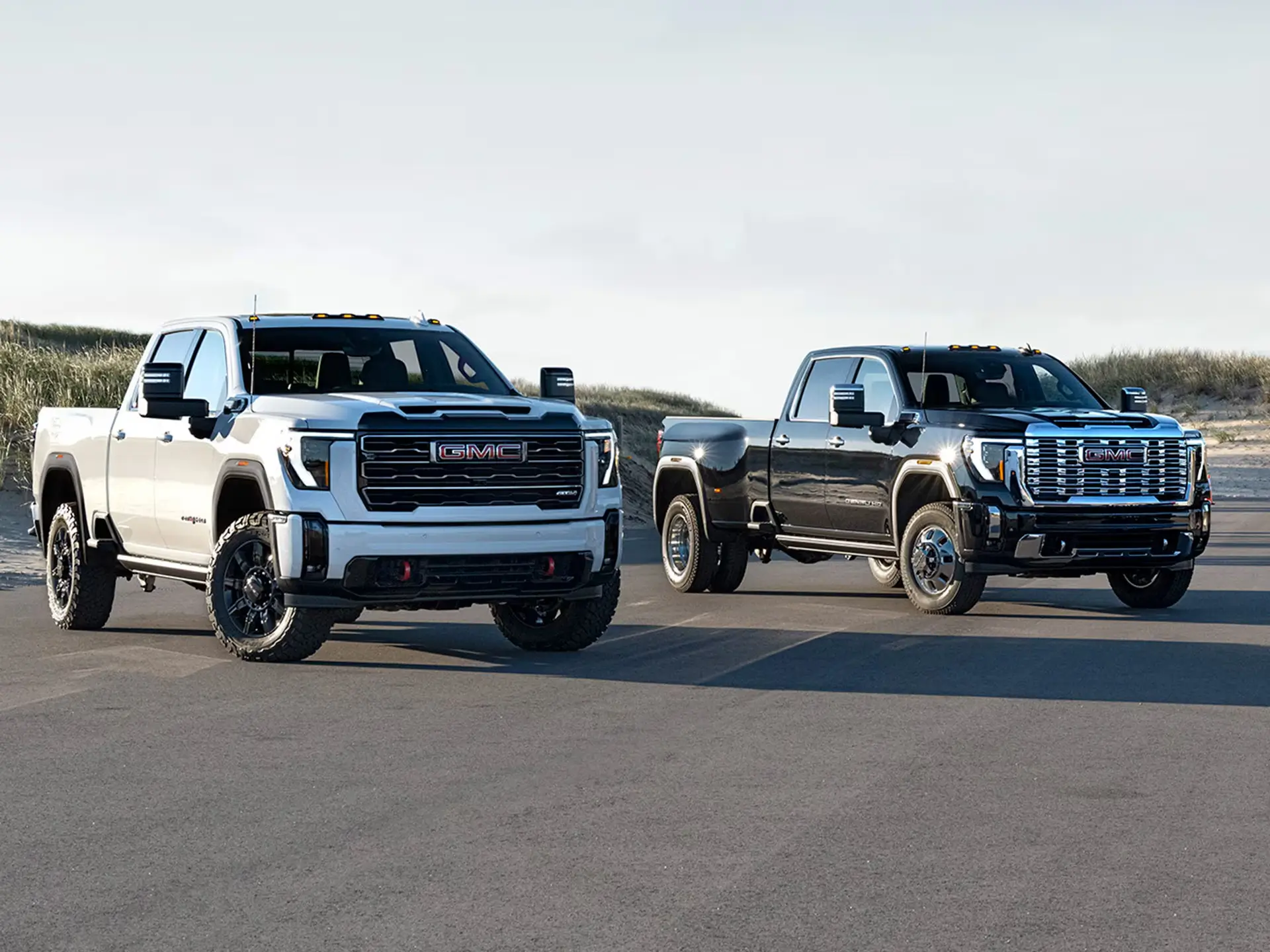
Differences Between The 2026 and 2025 GMC Sierra 1500
Not sure whether to buy a 2026 or 2025 GMC Sierra 1500? This breakdown covers the key updates for 2026—like Glacier White Tricoat, Coastal Dune, new wheel options, towing tech improvements, and a refined 6.2L V8 exhaust—plus the core features that remain the same across both model years.